If you have a letter from the fire marshal about your fire lanes, or you are planning a lot and want to avoid one, this is what you need to know. The main thing to understand is that fire lane marking in Connecticut is a local decision. The state gives the fire marshal the authority. The marshal and the town ordinance decide the details. That is why the fire lane at a plaza in one town is red and the one across the town line is yellow.
Who makes the rules
The Connecticut State Fire Safety Code and Fire Prevention Code adopt the International Fire Code with state amendments. Section 503 of that code covers fire apparatus access roads, which is what a fire lane is. It says access roads have to be kept clear, and that where the fire code official requires it, the property must post signs or markings that say NO PARKING FIRE LANE.
The key phrase is "where the fire code official requires it." In Connecticut that official is the local fire marshal. State statute lets the marshal designate fire lanes (the statute calls them fire zones), and most towns back that up with an ordinance that spells out the colors, lettering and sign details and sets fines for parking in one. Once a fire lane is designated, the owner is responsible for marking it and keeping the markings legible, usually within 30 days of written notice.
What the markings usually look like
Every town is a little different, but the typical Connecticut fire lane spec includes:
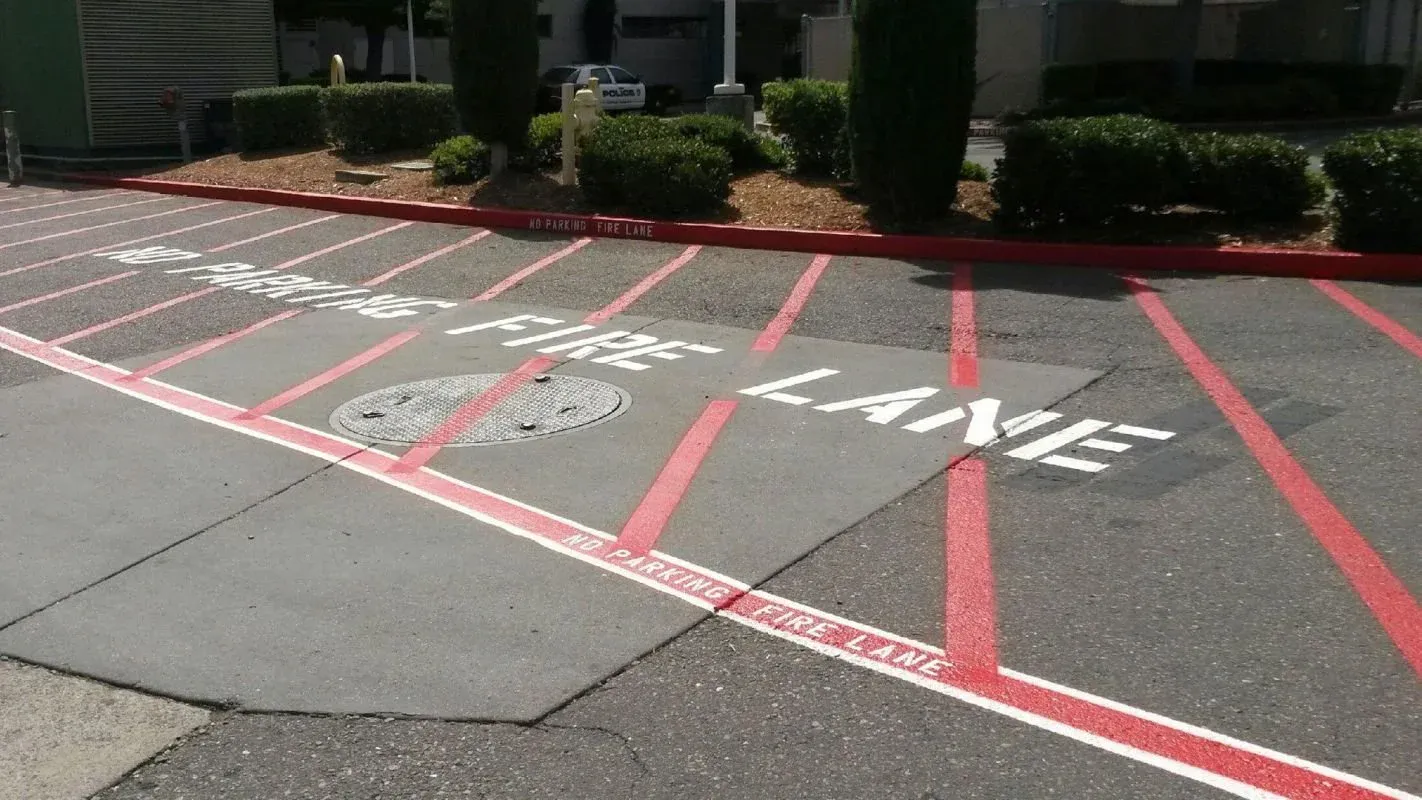
- Curb paint along the full length of the fire lane. Many towns specify yellow. Others specify red. Some accept either as long as the lettering is there.
- Lettering on the curb or pavement reading NO PARKING FIRE LANE (sometimes NO PARKING - FIRE LANE or FIRE LANE NO PARKING), repeated at a set interval, often every 25 to 50 feet.
- Pavement markings where there is no curb: a painted stripe along the edge of the lane with the same lettering, or a hatched zone.
- Signs at intervals along the lane, sized and worded per the ordinance. Signs are usually required in addition to paint, not instead of it.
- A minimum clear width. The fire code sets a 20 foot minimum unobstructed width for an access road, with 13 feet 6 inches of vertical clearance. Marshals use this when they decide where the lane goes.
Hydrants get their own no-parking zone, typically a painted area a set distance each side of the hydrant.
Red or yellow?
We get asked this on almost every job. The answer is: whatever your town's fire marshal says. Some Connecticut towns write yellow into the ordinance for both the curb and the lettering. Others use red curbs with white or red lettering. We have painted both, sometimes in neighboring towns in the same week.
If you have a notice from the marshal, it will usually say. If it does not, call the fire marshal's office before anyone paints. It is a five-minute call and it avoids painting the lane twice. We are happy to make that call for you as part of the quote.
When you get a notice
A fire marshal notice usually comes after an inspection or a complaint and gives you a deadline, often 30 days. Here is how to handle it without stress:
- Read it for specifics. Color, lettering, interval, sign requirements and the exact areas. Take a photo of the lot and mark where the lane runs.
- Send it to us with the address. We quote to the letter so there is nothing to argue about at re-inspection.
- Clear the lane for the work. Curb painting needs the cars gone for a few hours, and the paint needs to set before anyone bumps it.
- Keep the paperwork. Our invoice and a dated photo give you proof the work was done if the question comes up later.
Keeping it legible
Fire lane paint lives in the worst spot on the lot: the curb line where plows push the snow and the sand piles up. Expect to refresh fire lane curbs and stencils every one to three years, sooner on a lot with heavy winter traffic. Faded lettering is the most common reason a lot that passed once gets written up again. If you are re-striping the lot anyway, do the fire lane in the same visit. See our guide to how often to restripe.
What we do
Green Chief paints fire lanes, no-parking zones and curbs across Connecticut: curb paint in the color the town requires, NO PARKING FIRE LANE stencils at the specified interval, hydrant zones, hatched areas and the lane lines themselves. We can match a marshal's letter exactly and give you a dated photo record of the finished work.
Request a quote or call (860) 906-7740. If you have the marshal's notice, send it along.
This article is general information. The fire marshal in your town has the final word on your property.