When we lay out a lot from scratch, the first question is always stall size, and the second is aisle width. Get those two right and everything else falls into place. Here are the standard numbers, what Connecticut towns typically require, and how to think about angled and compact layouts.
Standard parking stall size
The most common commercial stall in Connecticut is 9 feet wide by 18 feet long. Many towns write that into their zoning regulations as the minimum. Some towns require 9 by 20, and a few older regulations still call for 10 by 20. Before a new layout we check the town's regulations, because a lot that was laid out to 8.5 foot stalls to squeeze in more cars can be a problem at the next site plan review.
Common sizes you will see:
| Stall type | Typical size |
|---|---|
| Standard | 9 ft x 18 ft (some towns 9 x 20 or 10 x 20) |
| Compact | 8 ft x 16 ft (where the town allows them) |
| Parallel | 8 ft x 22 ft |
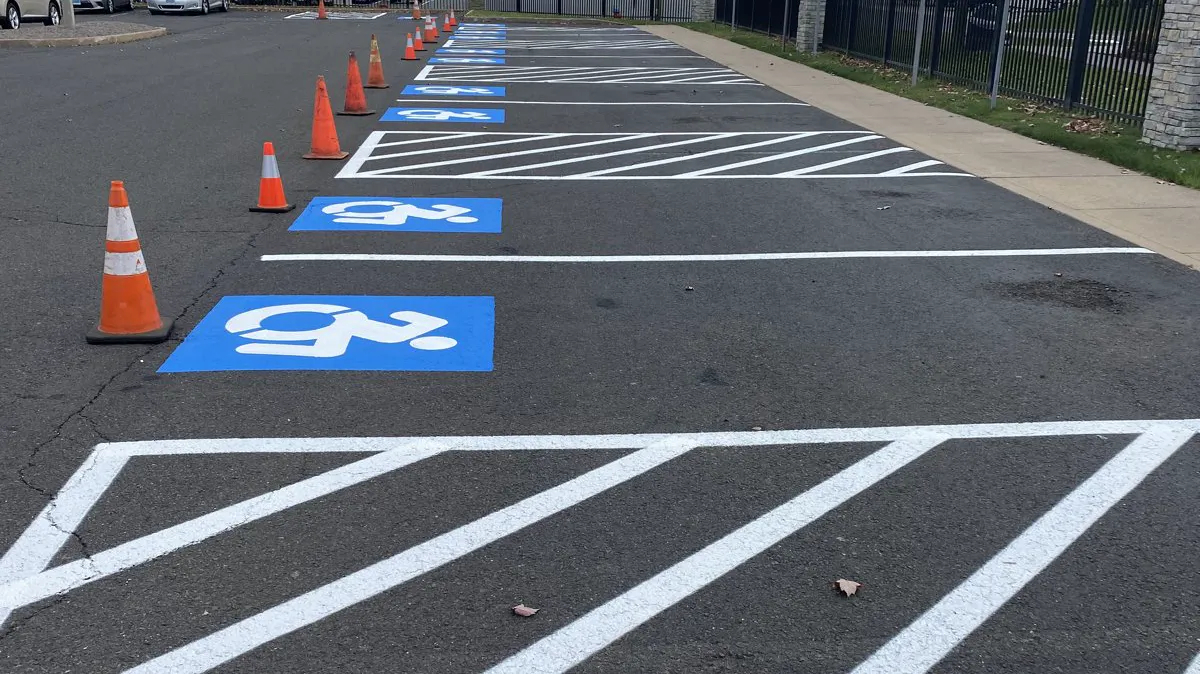
| Accessible car space (Connecticut) | 15 ft wide including a 5 ft aisle, 18 ft long |
| Accessible van space (Connecticut) | 16 ft wide including an 8 ft aisle, 18 ft long |
Connecticut's accessible stalls are wider than the federal ADA minimum. See our ADA parking guide for the full requirements, including how many you need.
Drive aisle width
The aisle is the lane cars use to get in and out of the stalls. Its width depends on the stall angle and whether traffic is one-way or two-way.
| Stall angle | Traffic | Typical aisle width |
|---|---|---|
| 90 degrees | Two-way | 24 ft |
| 60 degrees | One-way | 18 ft |
| 45 degrees | One-way | 13 to 15 ft |
| Parallel | Two-way | 22 to 24 ft |
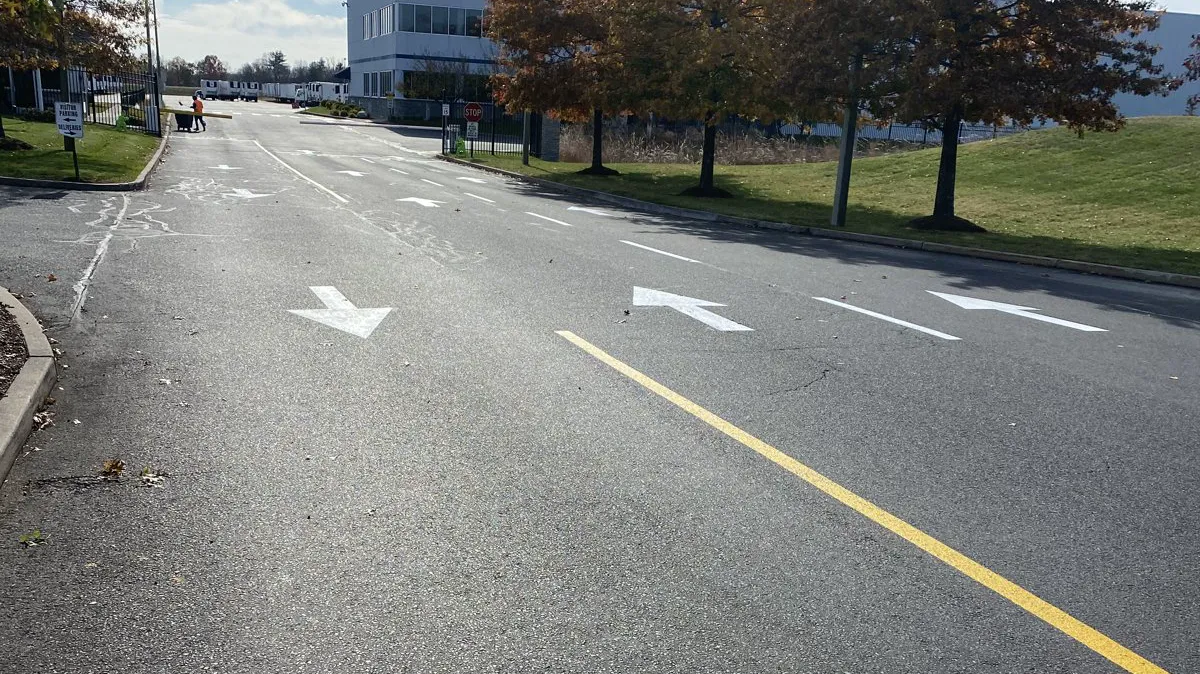
Twenty-four feet for two-way 90 degree parking is the number most Connecticut towns use, and it is also the width that lets a delivery truck or a fire truck get through. Narrower aisles work for one-way angled parking but need arrows so drivers know which way to go.
Angled vs. 90 degree parking
Ninety degree (perpendicular) stalls fit the most cars per square foot, work with two-way traffic, and are the default for most lots. They need the widest aisle and take a little more skill to park in.
Angled stalls (45 or 60 degrees) are easier to pull into, make one-way traffic flow obvious, and need a narrower aisle. The trade-off is fewer stalls per row and the need for a one-way loop, which does not fit every lot. Angled layouts are common on narrow lots, in front of strip retail, and anywhere you want to slow traffic down.
If a lot is being re-striped and the existing angle works, we keep it. If the lot is a mess of near-misses and cars backing into the aisle, changing the angle during a new layout is worth talking about.
Compact stalls
Some Connecticut towns allow a percentage of stalls to be compact (around 8 by 16) and some do not. Where they are allowed, they are a good way to pick up a few extra spaces in a tight lot, but they need a COMPACT stencil and they should be grouped, not scattered. Check the zoning regulations before adding them to a layout.
Islands, end caps and hatched areas
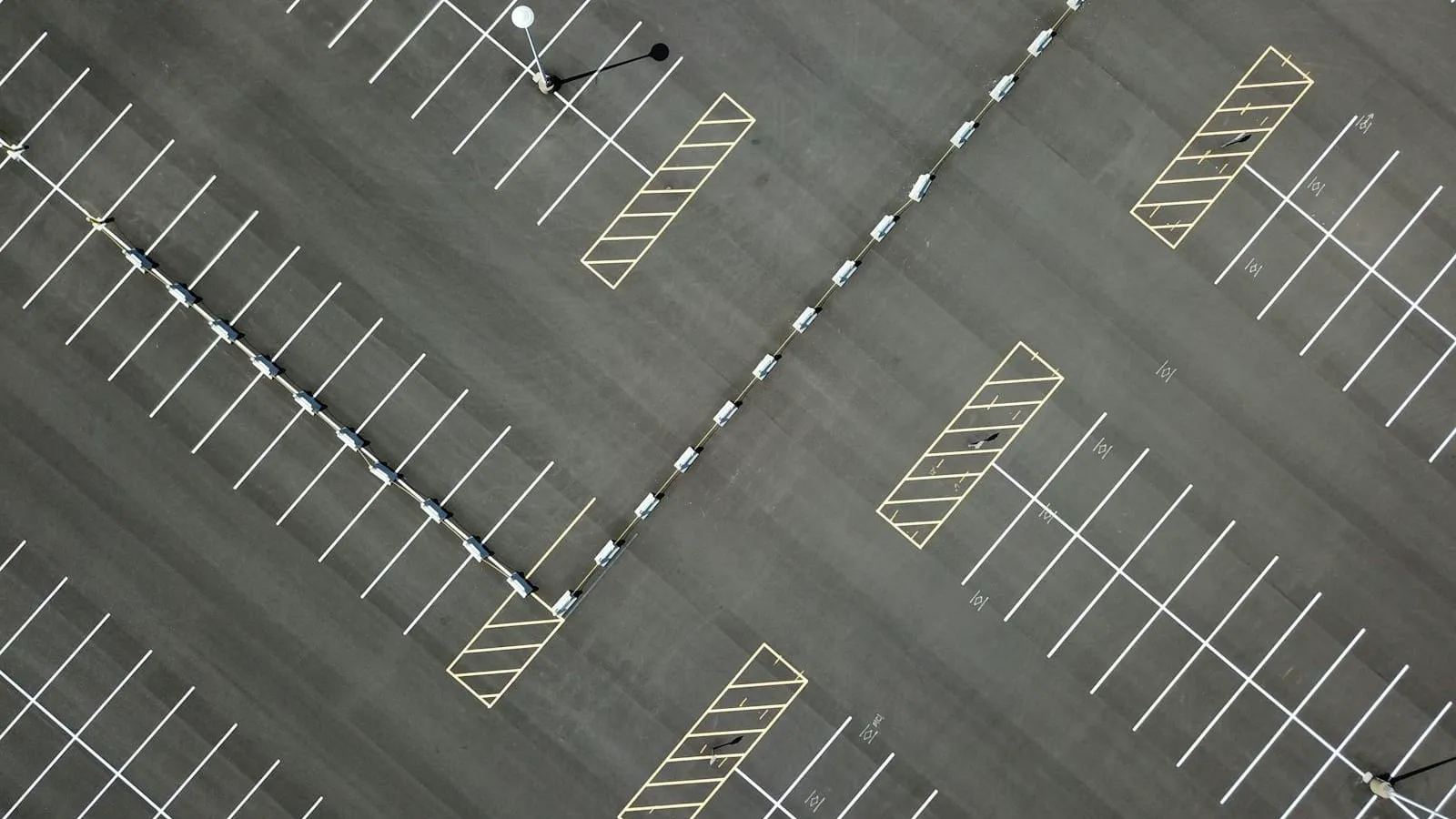
A row of stalls usually ends in a painted end cap or a hatched island that keeps the last car from blocking the aisle. Hatching also marks areas where nobody should park: in front of doors and dumpsters, around hydrants, and alongside accessible stalls. These are cheap to paint and prevent a lot of problems.
Line width and color
Stall lines on a commercial lot are 4 inches wide. White is standard for stalls and most markings. Yellow is used for hatching, no-parking zones, curbs and sometimes for the whole lot on warehouse and industrial sites. Blue is for accessible stalls. Fire lane color is set by the town.
Laying out a lot
For a new layout we start from the town's stall size, measure the lot, and figure out how many rows and aisles fit. Then we place the accessible stalls on the shortest route to the entrance, work out traffic flow and arrows, and locate fire lanes, crosswalks and loading zones. Only then does the chalk go down. On a big lot the measuring can take as long as the painting, which is why a new layout costs more than a re-stripe.
If you have a site plan, send it. If not, we measure on site. Either way we will tell you how many stalls the lot will hold before we paint a line.
Planning a lot in Connecticut? Request a quote or call Rick at (860) 906-7740.